How to Build a Waste Tire Recycling Plant?
Building a waste tire recycling plant requires more than purchasing a tire shredder. You need to determine the type of waste tires to process, the required production capacity, the final product, and the equipment needed for each processing stage. Some recycling businesses only need to produce tire chips, while others want to manufacture rubber granules…
Building a waste tire recycling plant requires more than purchasing a tire shredder. You need to determine the type of waste tires to process, the required production capacity, the final product, and the equipment needed for each processing stage.
Some recycling businesses only need to produce tire chips, while others want to manufacture rubber granules or fine rubber powder. These different goals require different equipment configurations and production processes.
At Shuliy, we provide waste tire recycling equipment for different processing requirements. In this guide, we explain how to plan a tire recycling plant, choose suitable machinery, and organize the production process.
1. Decide What Products You Want to Produce
Before selecting equipment, determine what you want to obtain from waste tires. This decision affects the entire plant layout and machinery configuration
Tire Chips
If your goal is to produce tire chips, a tire shredder can reduce whole or pre-cut tires into smaller rubber pieces. The required equipment depends on the tire dimensions, target chip size, and production capacity.
고무 과립
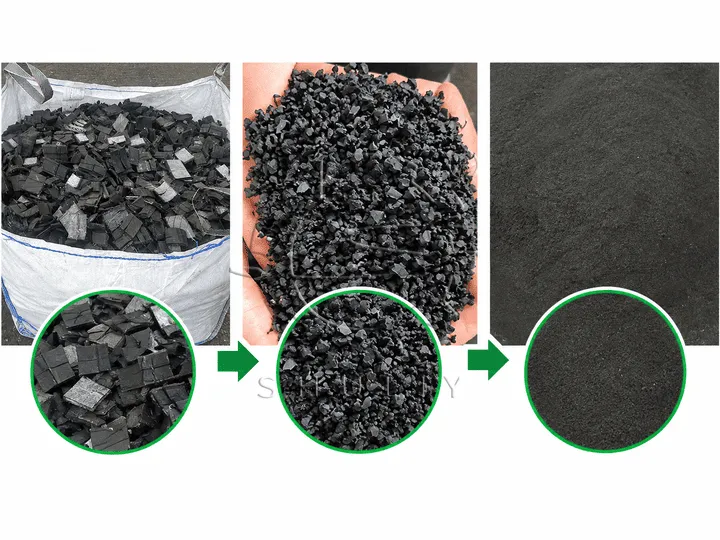
To produce rubber granules, waste tires generally need to pass through shredding and additional size-reduction stages. Steel wire and textile fiber should also be separated as required by the final product specifications.
고무 분말
Rubber powder production requires more processing than primary shredding. The tires are reduced into smaller pieces first and then processed through rubber grinding equipment. Magnetic separation and fiber separation can be incorporated to improve the purity of the final rubber powder.
Before investing in a tire recycling plant, confirm the target particle size and purity requirements so that the equipment can be selected accordingly.
2. Choose the Right Waste Tire Recycling Process
The production process depends on the raw materials and the final product.
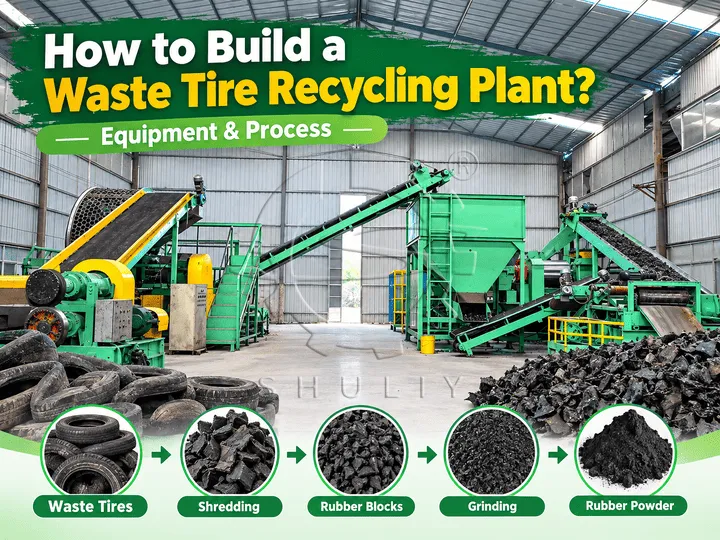
A typical waste tire recycling process for producing rubber powder can include:
Waste Tires → Tire Pretreatment → Tire Shredding → Rubber Grinding → Steel Separation → Fiber Separation → Rubber Powder
The exact sequence may vary depending on the tire type and the equipment configuration. Steel wire may be removed during pretreatment or separated at subsequent processing stages.
Tire Pretreatment
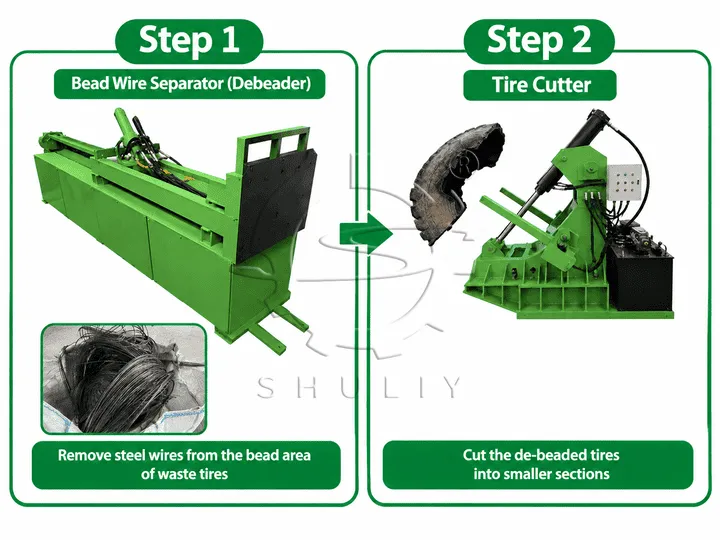
All tires contain steel wires in the bead area, so pretreatment is required before they enter the shredding process.
Depending on the application, a 타이어 탈착기 can remove steel wire from the tire bead, while a 타이어 절단기 can divide tires into smaller sections.
For large OTR tires used in mining and heavy-duty equipment, specialized dismantling and cutting equipment may be necessary before the material enters the main shredding stage.
Tire Shredding
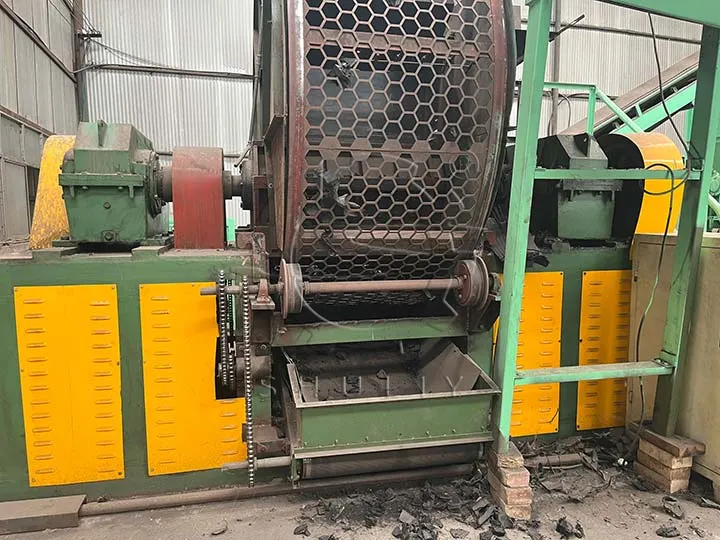
A 타이어 슈레더 uses heavy-duty blades to cut and tear waste tires into smaller rubber blocks.
This stage reduces the material size and prepares it for subsequent grinding or separation. The appropriate machine model depends on the maximum tire diameter, tire construction, desired output size, and required throughput.
Rubber Grinding and Separation
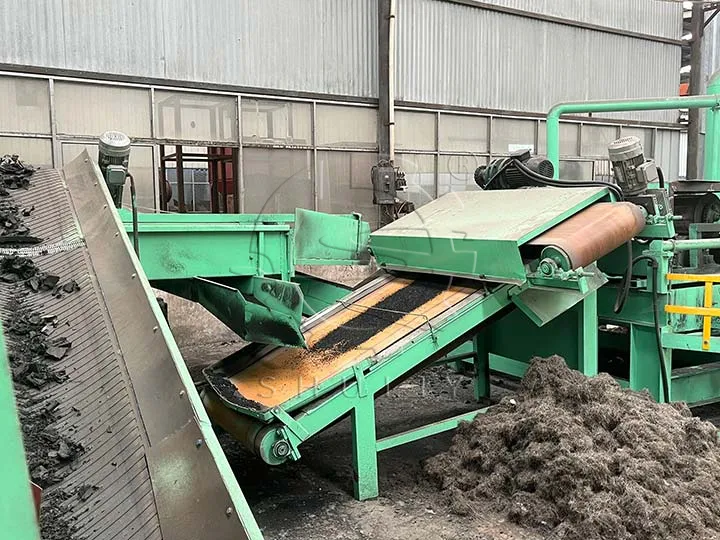
If the tire recycling plant produces rubber granules or powder, the shredded material can enter a rubber grinding system for further processing.
Magnetic separators help remove steel wire, while fiber separation equipment removes textile contaminants where necessary.
The final particle size depends on the grinding equipment and its configuration.
3. Select Suitable Tire Recycling Equipment
Once the process is established, the next step is to select equipment for each stage.
| Equipment | Main Function |
| 타이어 데이더 | Removes steel wire from tire beads |
| Tire cutting machine | Cuts tires into smaller sections |
| 타이어 파쇄기 | Shreds tires into rubber blocks |
| Rubber crusher or grinding mill | Reduces rubber into smaller particles |
| 자기 분리기 | Separates steel wire from rubber |
| 섬유 분리기 | Removes textile fiber from rubber material |
| Conveyor system | Transfers material between processing stages |
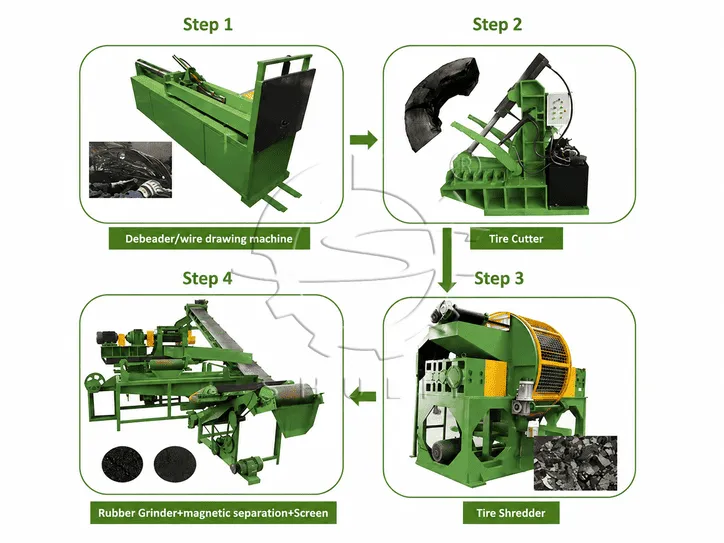
Not every tire recycling plant needs all of these machines. A plant producing tire chips may require only a relatively simple configuration, while a plant producing fine rubber powder generally needs additional grinding and separation equipment.
At Shuliy, we can configure the equipment according to your raw materials, target output, and production requirements.
4. Determine the Required Production Capacity
Production capacity is another important factor when building a 폐타이어 재활용 공장.
For example, a small recycling operation may require a few tons of waste tire processing per hour, while a larger commercial plant may need a significantly higher throughput.
When calculating the required capacity, consider the following factors:
- The number of waste tires available each day
- The operating hours planned for the plant
- The types and sizes of tires being processed
- The target output size
- The capacity of each machine in the production line
- The time required for maintenance and equipment adjustments
5. Consider Different Types of Waste Tires
The type of waste tire is directly related to equipment selection.
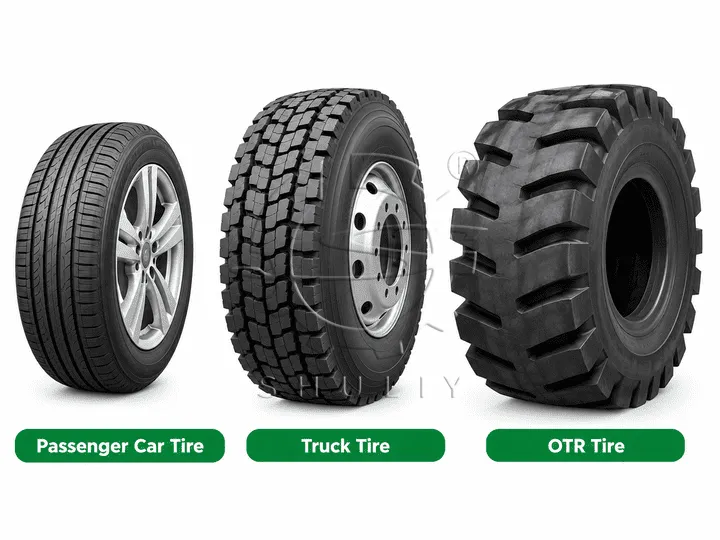
승용차 타이어
Passenger car tires are relatively small and can generally be processed using standard tire recycling equipment after appropriate preparation.
Truck and Bus Tires
Truck and bus tires are larger and heavier than passenger car tires. The selected equipment must have sufficient feeding capacity and cutting strength to handle them.
OTR and Mining Tires
OTR tires can have very large diameters and thick rubber sections. They may require specialized tire dismantling, debeading, and cutting equipment before shredding.
When planning an OTR tire recycling plant, provide the supplier with the maximum tire diameter, tire type, and approximate weight. These details help determine a suitable processing method.
6. Plan the Factory Layout
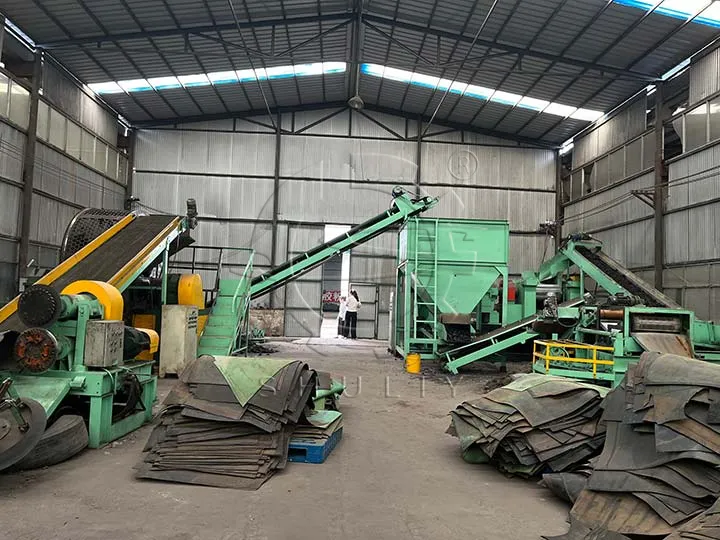
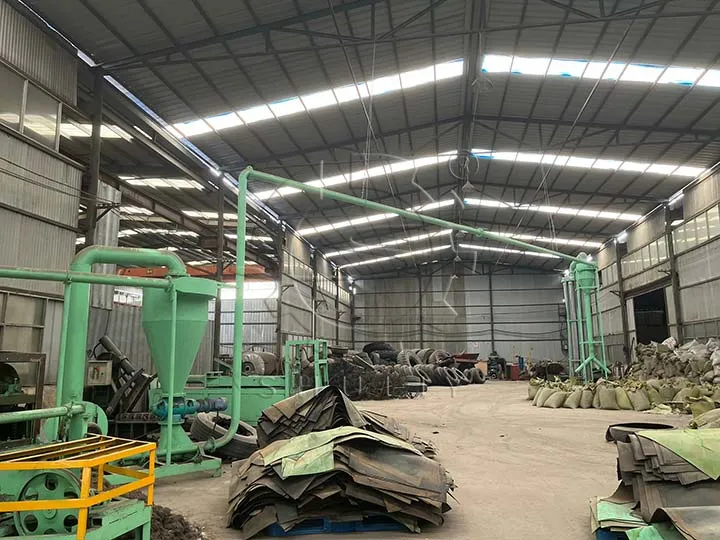
A well-planned factory layout helps materials move smoothly from one processing stage to the next.
Before installing the machinery, consider the following areas:
- Raw Material Storage: Space for receiving and storing waste tires before processing.
- Pretreatment Area: A designated area for tire cutting, debeading, or dismantling when required.
- Shredding Area: Space for the tire shredder, feeding equipment, and material discharge system.
- Grinding and Separation Area: Space for downstream crushers, grinding mills, magnetic separators, and fiber separation equipment.
- Finished Product Storage: Separate storage areas for rubber chips, granules, powder, and recovered steel wire, depending on the production process.
- Maintenance and Access: Sufficient room for equipment inspection, blade replacement, routine maintenance, and material handling.
7. Consider Power Supply and Operating Requirements
A waste tire recycling plant needs a suitable electrical supply and enough space for the installation and operation of its equipment.
Before ordering machinery, confirm:
- Local voltage and frequency
- Three-phase or other required power supply
- Total installed power
- Electrical control system requirements
- Material handling and lifting equipment
- Dust collection and ventilation requirements
- Maintenance access and spare parts availability
8. What Determines the Cost of a Waste Tire Recycling Plant?
The investment required for a waste tire recycling plant varies according to the production goals and equipment configuration.
Several factors affect the total project cost.
- 생산 능력: Larger processing capacities generally require heavier-duty machinery and more powerful drive systems.
- Final Product: Producing tire chips usually requires fewer processing stages than producing fine rubber powder with specific particle-size and purity requirements.
- Raw Material Type: Standard passenger car tires and large OTR tires may require different pretreatment equipment.
- Automation Level: Conveyor systems and automatic material handling can reduce manual handling but add to the initial equipment investment.
- Factory Infrastructure: Electrical installation, foundations, ventilation, storage areas, and other site requirements should be included in the overall budget.
- Installation and Transportation: Shipping, installation, commissioning, and local handling expenses should also be considered when estimating the total investment.
For an accurate quotation, it is best to provide the supplier with your target capacity, raw material details, final product requirements, and preferred equipment configuration.
9. How to Choose a Waste Tire Recycling Equipment Supplier
Choosing the right supplier is an important part of building a successful 타이어 재활용 공장.
When comparing suppliers, consider the following points:
- Equipment suitability: Can the machinery handle your actual tire types and dimensions?
- Complete process planning: Can the supplier recommend equipment for pretreatment, shredding, grinding, and separation?
- Capacity matching: Are the machines properly matched to the required production output?
- Customization: Can the configuration be adjusted to meet your output size and processing requirements?
- Technical support: Does the supplier provide installation guidance, operating instructions, and after-sales support?
- Spare parts: Are replacement blades and other wearing parts available?
10. Build a Waste Tire Recycling Plant with Shuliy
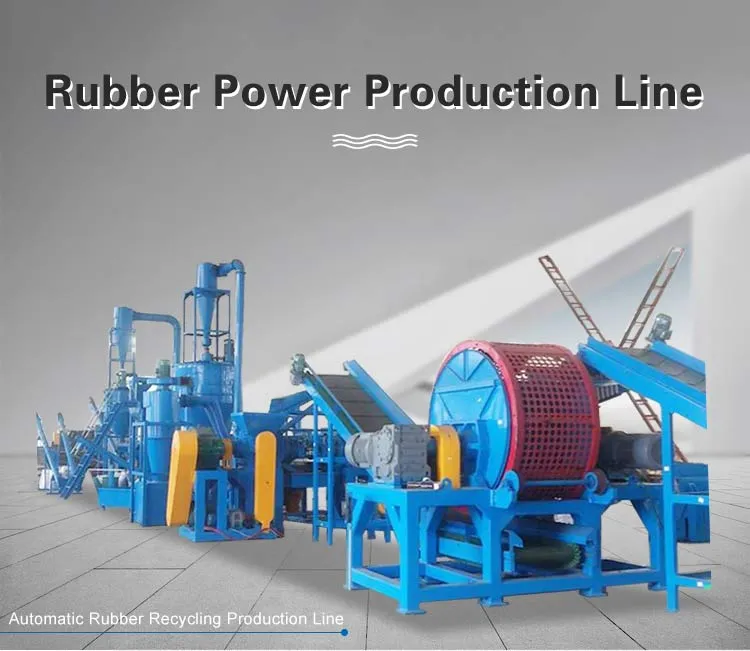
Shuliy provides tire shredding machines and supporting equipment for waste tire recycling projects. Depending on the required final product, the equipment can be configured for primary tire shredding or integrated into a more complete rubber granule and rubber powder production line.
Our solutions can be tailored to different tire types, including passenger car tires, truck tires, and selected OTR tire applications, subject to the equipment’s processing limits.
Whether you plan to produce tire chips or process waste tires into rubber powder, we can help you evaluate the required equipment and arrange a suitable processing flow.
To recommend the right solution, please share the following information:
- Raw material: Passenger car tires, truck tires, OTR tires, or a mixture
- Maximum tire diameter: The largest tire you need to process
- Required capacity: Tons per hour or tons per day
- Final product: Tire chips, rubber granules, or rubber powder
- Target particle size: The required size of the final material
Contact Shuliy to discuss your waste tire recycling project. Based on your requirements, we can recommend suitable tire shredding equipment and a corresponding recycling line configuration.