Tire Shredding Equipment: How to Shred Waste Tires?
Tire shredding equipment is an important part of the waste tire recycling process. Large waste tires are difficult to handle, transport, and process directly because of their strong rubber structure and embedded steel wire. Shredding them into smaller rubber blocks makes the material easier to separate, grind, and reuse. So, how do you shred waste…
Tire shredding equipment is an important part of the waste tire recycling process. Large waste tires are difficult to handle, transport, and process directly because of their strong rubber structure and embedded steel wire. Shredding them into smaller rubber blocks makes the material easier to separate, grind, and reuse.
So, how do you shred waste tires efficiently? In a typical tire recycling process, waste tires are first prepared by removing the rim and, when necessary, separating or reducing the steel-containing parts. The prepared tires are then fed into a heavy-duty tire shredder machine, which cuts and tears them into controlled-size rubber blocks for further processing.
What Is Tire Shredding?
Tire shredding is the process of reducing whole or pre-cut waste tires into smaller pieces using specialized cutting and shearing equipment.
Unlike ordinary rubber materials, waste tires contain high-strength rubber, steel wire, and sometimes textile fiber. Therefore, conventional crushers are generally not suitable for handling whole tires directly. A dedicated tire shredder machine uses heavy-duty blades and a powerful transmission system to gradually cut and tear tires into smaller pieces.
Our tire shredding equipment can produce rubber blocks approximately 50–100 mm in size. The circular screen can also be customized to help control the final output size.
These shredded tire blocks can then be used as feedstock for further rubber grinding, steel separation, or other recycling processes.
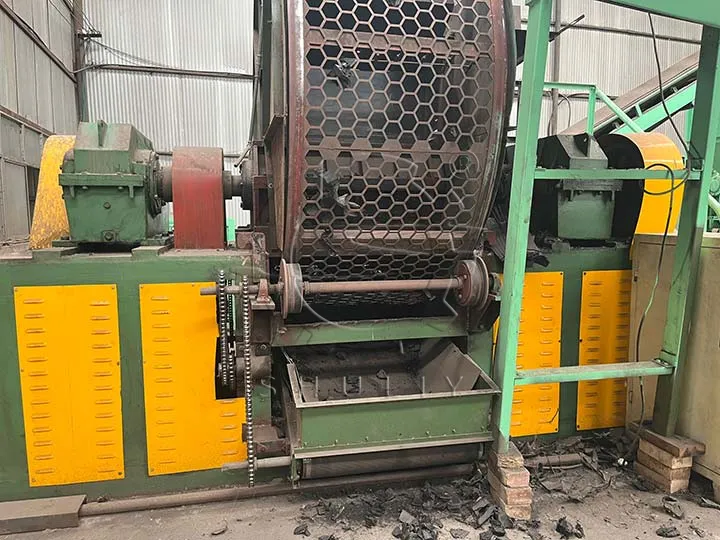
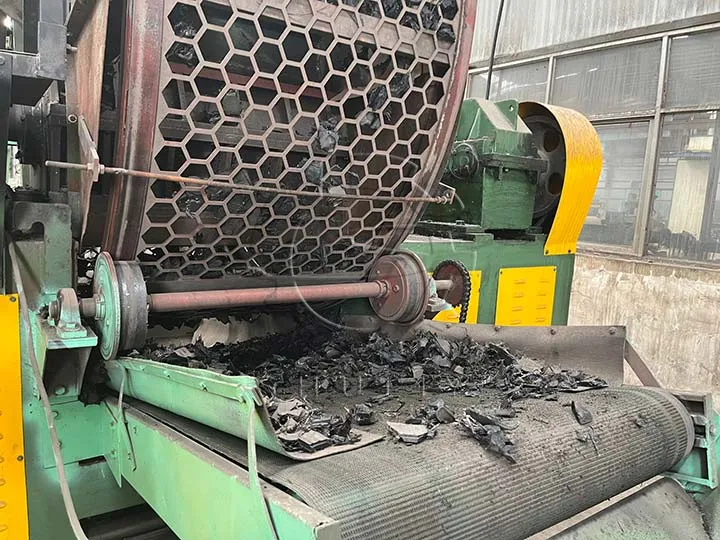
How to Shred Waste Tires Step by Step
The exact process depends on the tire type and the desired final product, but a typical waste tire shredding process includes the following steps.
Step 1: Prepare the Waste Tires
Before shredding, waste tires should be inspected and prepared according to the equipment configuration.
For passenger car and truck tires, the metal rim should be removed before processing. For larger tires, especially OTR tires, additional cutting or dismantling may be required to make the tires suitable for the next stage.
Depending on the recycling line, equipment such as a tire debeader, tire cutting machine, and steel wire separator can be used for pretreatment.
Proper preparation reduces the load on the shredder and helps improve the efficiency of the overall recycling line.
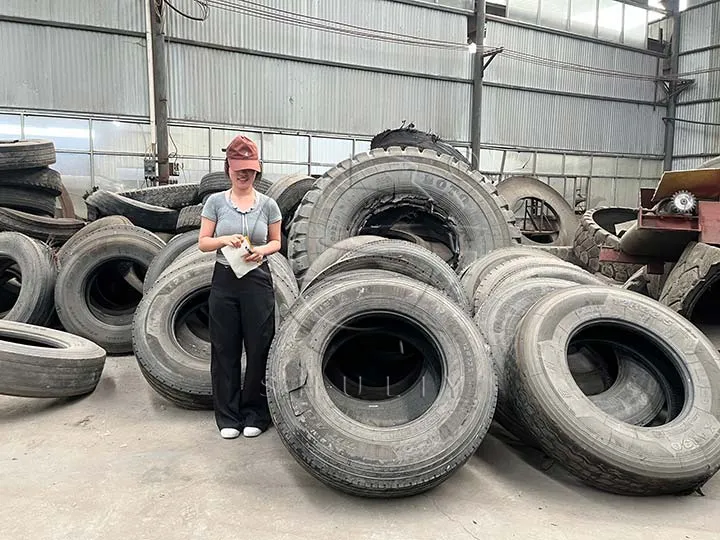
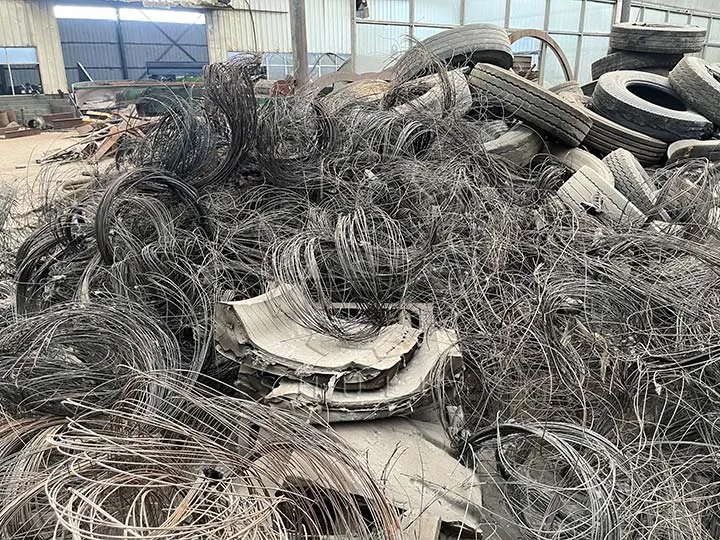
Step 2: Feed the Tires into the Shredder
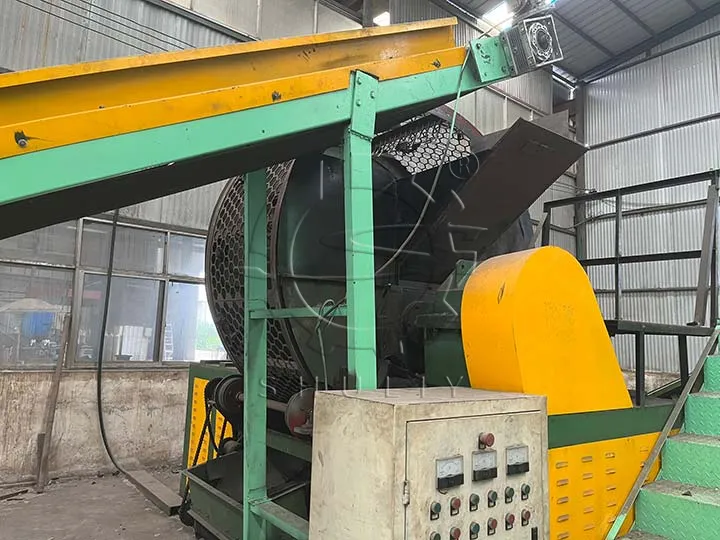
After pretreatment, the tire material is conveyed into the feeding hopper of the tire shredding equipment.
The feeding system provides a continuous supply of material to the shredding chamber. For larger recycling plants, a conveyor can be installed to connect the pretreatment equipment with the shredder.
Step 3: Cut and Tear the Tires
Inside the shredding chamber, the rotating blade shafts apply strong cutting and shearing forces to the tires.
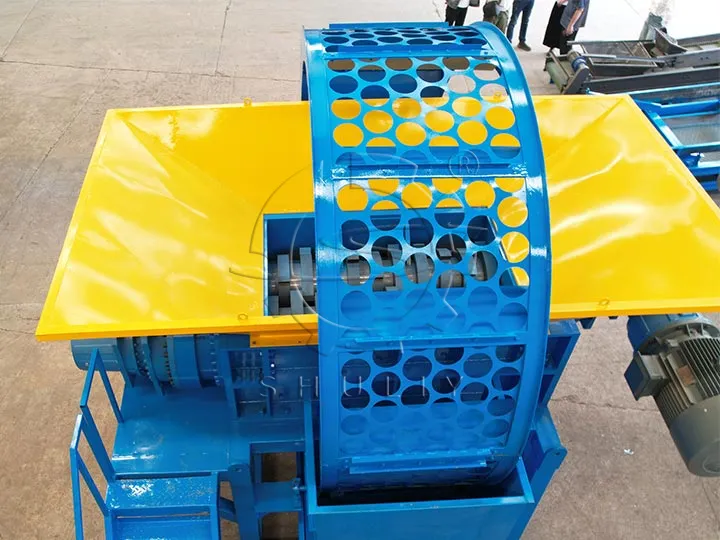
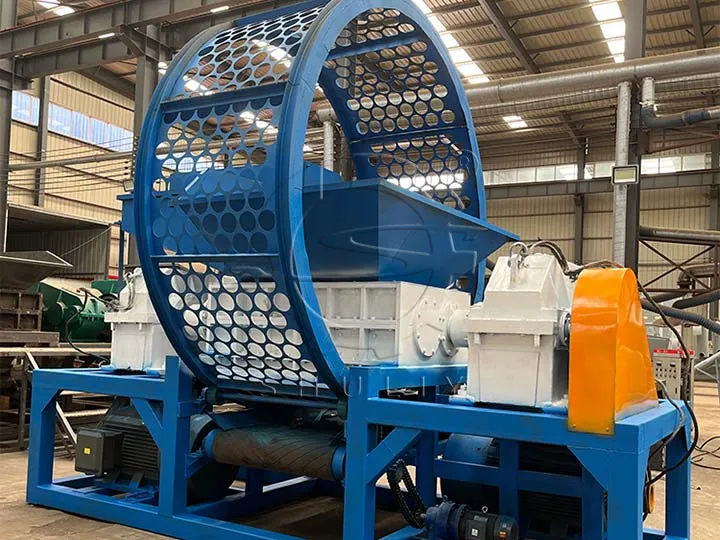
The main components involved in this process include:
- Feeding hopper
- Motor and transmission system
- Shredding chamber
- Heavy-duty blades
- Circular screen
- Heavy-duty machine frame
The high-strength alloy steel blades are designed to handle the tough rubber structure of waste tires.
As the blades rotate, the tires are gradually cut into smaller rubber pieces.
Step 4: Screen the Shredded Rubber
After the material is shredded, pieces that meet the required size can pass through the circular screen and leave the shredding chamber.
Oversized pieces remain inside the chamber for further cutting until they reach the required size.
The screen opening can be customized according to the customer’s desired output size.
For example, different tire shredder models can produce output sizes ranging from approximately 50 mm to 100 mm, depending on the tire shredding equipment configuration.
Step 5: Send the Tire Blocks to the Next Processing Stage
The shredded rubber blocks can then be transported to the next stage of the recycling process.
If the goal is to produce larger tire chips, shredding may be the main processing stage.
If the goal is to produce rubber granules or rubber powder, the shredded material normally needs to go through additional grinding and separation equipment.
What Happens After Waste Tires Are Shredded?
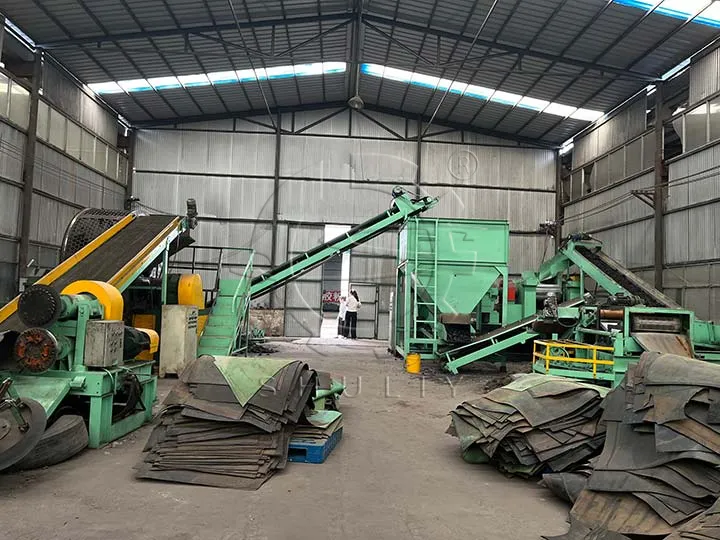
Shredding is usually not the final step in a complete waste tire recycling project.
The appropriate downstream equipment depends on the customer’s final product.
A typical process can be:
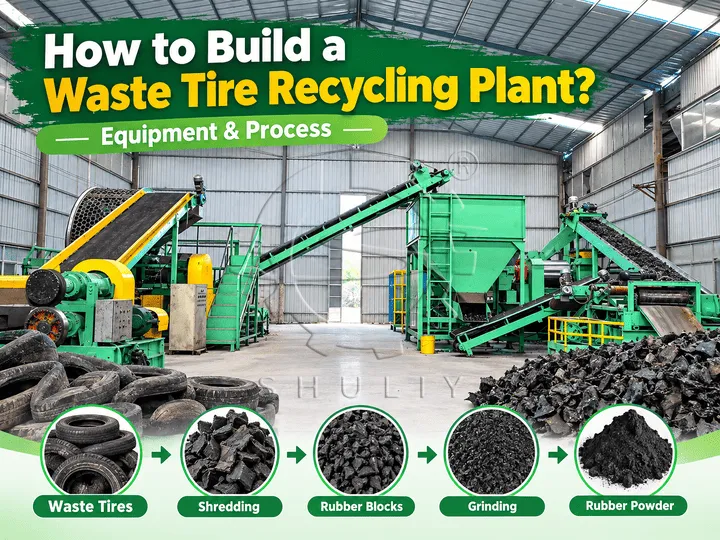
Waste Tires → Pretreatment → Tire Shredding → Rubber Blocks → Fine Grinding → Rubber Granules/Powder
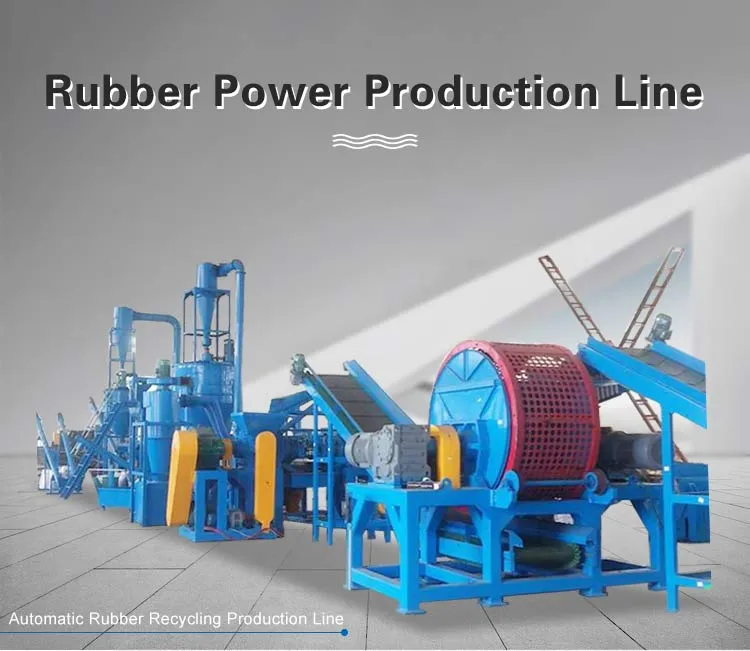
For a rubber powder production line, waste tires can first be processed using tire debeading, cutting, and steel separation equipment. The prepared tire material is then fed into the tire shredding equipment to produce smaller rubber blocks.
These blocks are easier to handle in the subsequent grinding process.
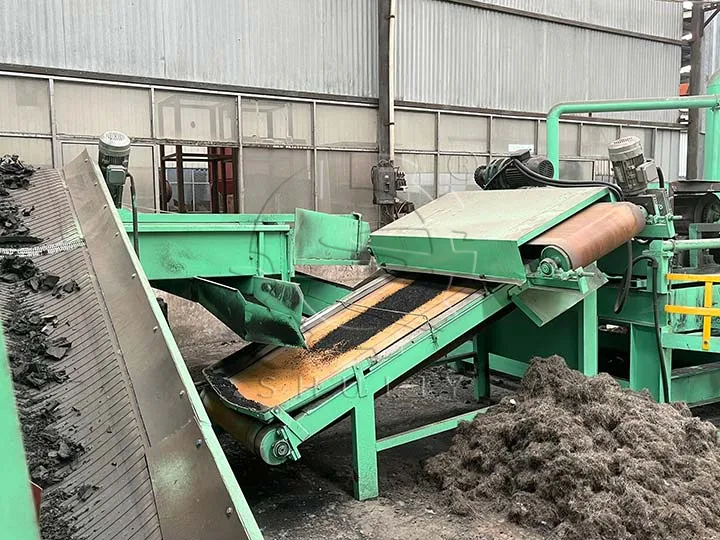
After shredding, the rubber chips can be sent to a rubber powder mill for further grinding. Magnetic separation equipment can also be integrated into the line to remove recovered steel wire.
The final product can be rubber granules or rubber powder with different particle sizes, depending on the downstream equipment and customer requirements.

What Types of Tires Can a Tire Shredder Process?
The appropriate model depends on the size and type of tires being processed.
Passenger Car Tires
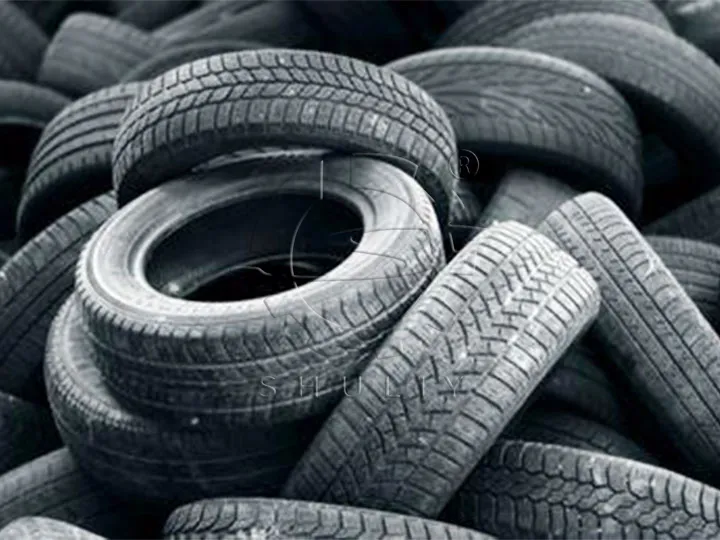
Small waste tires can be processed after the tire wires and other unsuitable components are removed. A smaller-capacity tire shredder can be suitable for recycling projects with relatively moderate throughput requirements.
Truck Tires
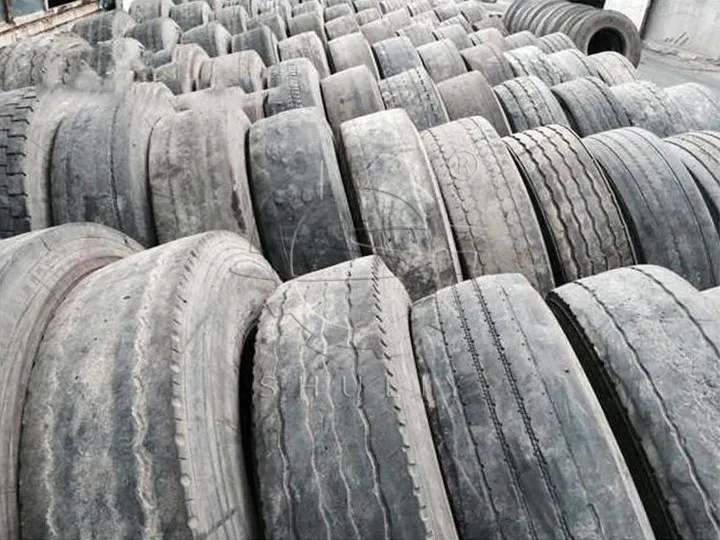
Truck tires have a larger diameter and heavier rubber structure than passenger car tires. Therefore, a suitable model with sufficient power and feed capacity is required.
OTR Tires
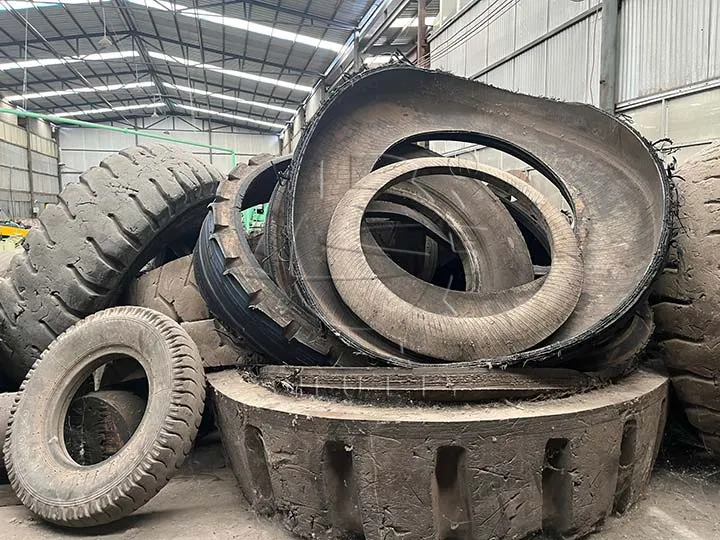
OTR, or Off-the-Road, tires are much larger and heavier than ordinary vehicle tires. Depending on the tire size, they may need to be dismantled or cut before entering the tire shredder.
For large OTR tire recycling projects, the complete process may include additional debeading, cutting, and steel separation equipment.
Therefore, when selecting tire shredding equipment, it is important to provide the actual tire diameter and type rather than choosing a machine based only on the desired capacity.
How to Choose the Right Tire Shredding Equipment?
Choosing the right tire shredder should start with the raw material and the final product rather than simply looking at motor power.
Tire Type and Size
Tell the supplier what types of tires you plan to process:
- Passenger car tires
- Truck tires
- Bus tires
- Agricultural tires
- OTR tires
The maximum tire diameter is also important because different models have different feed-size ranges.
Required Capacity
Determine how many tons of waste tires you need to process per hour.
For example, a small recycling project may only require a few tons per hour, while a large commercial recycling plant may require a capacity of 10–20 tons/hour or more.
Desired Output Size
Do you need 50 mm tire blocks, 60 mm chips, 75 mm pieces, or approximately 100 mm material?
The required output size affects the shredder configuration and the subsequent processing equipment.
Final Product
Your final product also determines the recycling process.
If you only need tire chips, the shredding stage may be sufficient.
If you want to produce rubber granules or rubber powder, you will need additional grinding and separation equipment after shredding.
Complete Plant Layout
For a complete tire recycling project, the shredder should be selected as part of the entire production line.
The feeding system, pretreatment equipment, conveyors, steel separation, grinding equipment, and final product collection system all need to work together.
Conclusion
Tire shredding equipment plays a key role in turning large waste tires into manageable rubber blocks for further recycling. The basic process is straightforward: prepare the waste tires, feed them into the tire shredder, cut and tear them into smaller pieces, screen the material, and send the correctly sized rubber blocks to the next processing stage.
For customers who need rubber granules or rubber powder, the tire shredder can be combined with tire debeading, cutting, steel separation, rubber grinding, and other equipment to form a complete waste tire recycling line.
Shuliy offers multiple tire shredding machine models with capacities ranging from approximately 2 to 20 tons/hour, with customizable screen configurations and complete recycling solutions according to different tire types and production requirements.
If you are planning a waste tire recycling project, send us information about your tire type, maximum tire diameter, required capacity, and desired final product. We can recommend suitable tire shredding equipment and a complete processing solution for your project.